




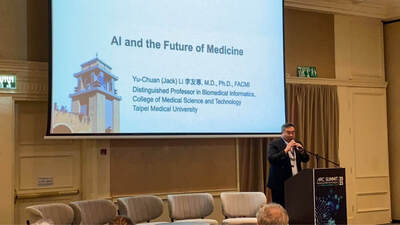

Jack Li

:::
這是一張圖片
這是一張圖片


Yu-Chuan Jack Li, ranked among the top 2% of scientists worldwide for three consecutive years, is an internationally recognized leading expert in medical artificial intelligence and translational biomedical informatics. His exceptional accomplishments span decades of pioneering large-scale initiatives and international collaborations across Asia, the United States, Europe, and Africa, creating a significant global impact.

As principal investigator of numerous national and international projects, Prof. Li has advanced the use of AI in disease prevention, with a strong focus on patient safety and quality, as well as “Earlier Medicine,” a temporally predictive and proactive approach to personalized health. This approach shifts medical practice from passively reacting to current conditions to proactively addressing predictable medical events through AI-powered insights.

His research on Temporal Phenomic Stochastic Models has led to the development of the largest model of its kind, integrating diverse medical data elements such as medications, diagnoses, laboratory tests, examinations, and procedures.

Throughout his career, he has remained deeply committed to bridging the gap between clinical research, real-world practice, and the integration of AI into the medical industry.

​His impactful contributions have earned him fellowships in prestigious organizations, including the Australian College of Health Informatics, the American College of Medical Informatics, and the International Academy of Health Sciences Informatics, along with numerous awards recognizing his contributions to the field.

He currently serves as Distinguished Professor at Taipei Medical University; Dermatologist at Taipei Municipal Wanfang Hospital; CEO of the TMU Research Center for AI in Medicine and Health; President of the Taipei Medical University Doctors’ Association; and Editor-in-Chief of BMJ Health and Care Informatics, while remaining actively engaged in clinical practice and addressing real-world healthcare challenges.

He previously served as President of the International Medical Informatics Association (IMIA), an NGO with close ties to the World Health Organization (WHO), dedicated to connecting professionals worldwide to advance biomedical and health informatics science, education, and practice.

​
 ⎯  Research Tag  ⎯


CURRENT POSITION

More Experience


EDUCATION

這是一張圖片

Taipei Medical University

M.D., Medicine ​​
1984-1991

這是一張圖片

University of Utah ​School of Medicine

Ph.D, Medical Informatics
​1991-1994


HONORS


這是一張圖片
 

​Top 2% Scientists of the World

2021、2022、2023、2024、2025
 
裝飾圖片
 

Inaugural Fellow​

​International Academy of Health Sciences Informatics (IAHSI)
International Medical Information Association​

​2017
​
裝飾圖片
 

The 19th National Innovation Award

Academic Research
Innovation
 
Research Center for Biotechnology and Medicine
Policy

2022
裝飾圖片
 

Elected Fellow​

Australasian College of Health
Informatics (ACHI)
​The Australasian College of Health Informatics

​2010
​​
裝飾圖片
 

Elected Fellow​

American College of Medical
Informatics (ACMI)
​American Medical Informatics Association

​2010
​​

SELECTED TALKs

這是一張圖片

More Talks


健保破兆要破產?AI複製人讓"癌症"變"感冒" 台灣得快做!

健康DoReMi
May 23, 2026


SELECTED PUBLICATIONs

 
裝飾圖片
 

Using artificial intelligence-based models to predict the risk of mucormycosis among COVID-19 survivors: An experience from a public hospital in India

Picture
 
India reported a severe public health challenge not only due to the COVID-19 outbreak but also the increasing number of associated mucormycosis cases since 2021.This study aimed at developing artificial intelligence based models to predict the risk of mucormycosis among the patients at the time of discharge from hospital.
 
The dataset included of 1229 COVID-19 positive patients, and additional 214 inpatients, COVID-19 positive as well as infected with mucormycosis. We used logistic regression, decision tree and random forest and the extreme gradient boosting algorithm. All our models were evaluated with 5-fold validation to derive a reliable estimate of the model error.
 
The logistic regression, XGBoost and random forest performed equally well with AUROC 95.0, 94.0, and 94.0 respectively. The best accuracy and precision (PPV) were 0.91 ± 0.026 and 0.67 ± 0.0526, respectively achieved by XGBoost, followed by logistic regression. This study also determined top five variables namely obesity, anosmia, de novo diabetes, myalgia, and nasal discharge, which showed positive impact towards the risk of mucormycosis.
 
The developed model has the potential to predict the patients at high risk and thus, consequently initiating preventive care or aiding in early detection of mucormycosis infection. Thus, this study, holds potential for early treatment and better management of patients suffering from COVID-19 associated mucormycosis.

​Full Text


Syed-Abdul S, Babu AS, Bellamkonda RS, Itumalla R, Acharyulu G, Krishnamurthy S, Ramana YVS, Mogilicharla N, Malwade S, YC Li
Journal of Infection, 2022 Mar;84(3):351-354
 

​How Artificial Intelligence can make medicine more pre-emptive?

Artificial Intelligence (AI) is ushering in a new era of “Earlier Medicine”. The burgeoning healthcare technological landscape is showing great potential; from diagnosis and prescribing automation to early detection of disease through efficient and cost-effective patient data screening which benefit from the predictive capabilities of AI. Monitoring prognosis of both in and outpatients has proven a task AI can perform to a reliable degree, saving lives of critical care patients and helping manage cases based upon early predictions.​

“Earlier Medicine” refers to a temporally predictive and proactive approach to individualized health enabled by innovative AI modeling plus longitudinal/personal health big data. It calls on medical practice to not just react or manage present situations but also medical events of the foreseeable future. Such an approach will save money, lives, and our health care ecosystem from inefficiencies and disintegration.

​Full Text

Usman Iqbal, Leo Anthony Celi, Yu-Chuan Jack Li
​Journal of Medical Internet Research, 2020;22(8):e17211


Machine Learning Approaches for Predicting Psoriatic Arthritis Risk Using Electronic Medical Records: Population-Based Study

Picture
 
Psoriasis (PsO) is a chronic, systemic, immune-mediated disease with multiorgan involvement. Psoriatic arthritis (PsA) is an inflammatory arthritis that is present in 6%-42% of patients with PsO. Approximately 15% of patients with PsO have undiagnosed PsA. Predicting patients with a risk of PsA is crucial for providing them with early examination and treatment that can prevent irreversible disease progression and function loss.

The aim of this study was to develop and validate a prediction model for PsA based on chronological large-scale and multidimensional electronic medical records using a machine learning algorithm. This case-control study used Taiwan’s National Health Insurance Research Database from January 1, 1999, to December 31, 2013. The original data set was split into training and holdout data sets in an 80:20 ratio. A convolutional neural network was used to develop a prediction model. This model used 2.5-year diagnostic and medical records (inpatient and outpatient) with temporal-sequential information to predict the risk of PsA for a given patient within the next 6 months. The model was developed and cross-validated using the training data and was tested using the holdout data. An occlusion sensitivity analysis was performed to identify the important features of the model.

The prediction model included a total of 443 patients with PsA with earlier diagnosis of PsO and 1772 patients with PsO without PsA for the control group. The 6-month PsA risk prediction model that uses sequential diagnostic and drug prescription information as a temporal phenomic map yielded an area under the receiver operating characteristic curve of 0.70 (95% CI 0.559-0.833), a mean sensitivity of 0.80 (SD 0.11), a mean specificity of 0.60 (SD 0.04), and a mean negative predictive value of 0.93 (SD 0.04).

The findings of this study suggest that the risk prediction model can identify patients with PsO at a high risk of PsA. This model may help health care professionals to prioritize treatment for target high-risk populations and prevent irreversible disease progression and functional loss.

​
Full Text


Lee L, Yang H, Nguyen P, Muhtar M, YC Li
Journal of Medical Internet Research, 2023;25:e39972
 

​Assessment of Deep Learning Using Nonimaging Information and Sequential Medical Records to Develop a Prediction Model for Nonmelanoma Skin Cancer

A prediction model for new-onset nonmelanoma skin cancer could enhance prevention measures, but few patient data–driven tools exist for more accurate prediction. To use machine learning to develop a prediction model for incident nonmelanoma skin cancer based on large-scale, multidimensional, nonimaging medical information.

This study used a database comprising 2 million randomly sampled patients from the Taiwan National Health Insurance Research Database from January 1, 1999, to December 31, 2013. A total of 1829 patients with nonmelanoma skin cancer as their first diagnosed cancer and 7665 random controls without cancer were included in the analysis. A convolutional neural network, a deep learning approach, was used to develop a risk prediction model. This risk prediction model used 3-year clinical diagnostic information, medical records, and temporal-sequential information to predict the skin cancer risk of a given patient within the next year. Stepwise feature selection was also performed to investigate important and determining factors of the model. Statistical analysis was performed from November 1, 2016, to October 31, 2018.

The findings of this study suggest that a risk prediction model may have potential predictive factors for nonmelanoma skin cancer. This model may help health care professionals target high-risk populations for more intensive skin cancer preventive methods.
​
Full Text

HH Wang, YH Wang, CW Liang, YC Li
​JAMA Dermatology, 2019;155(11):1277-1283

A novel tool for visualizing chronic kidney disease associated polymorbidity: a 13-year cohort study in Taiwan

The aim of this study is to analyze and visualize the polymorbidity associated with chronic kidney disease (CKD). The study shows diseases associated with CKD before and after CKD diagnosis in a time-evolutionary type visualization.

Our sample data came from a population of one million individuals randomly selected from the Taiwan National Health Insurance Database, 1998 to 2011. From this group, those patients diagnosed with CKD were included in the analysis. We selected 11 of the most common diseases associated with CKD before its diagnosis and followed them until their death or up to 2011. We used a Sankey-style diagram, which quantifies and visualizes the transition between pre- and post-CKD states with various lines and widths. The line represents groups and the width of a line represents the number of patients transferred from one state to another.

The patients were grouped according to their states: that is, diagnoses, hemodialysis/transplantation procedures, and events such as death. A Sankey diagram with basic zooming and planning functions was developed that temporally and qualitatively depicts they had amid change of comorbidities occurred in pre- and post-CKD states.

​Full Text

CW Huang, S Syed-Abdul, WS Jian, U Iqbal, PA Nguyen, PS Lee, SH Lin, WD Hsu, MSWu, CF Wang, KL Ma, YC Li
Journal of the American Medical Informatics Association, Vol 22, Iss 2, Mar 2015, P290–298

A probabilistic model for reducing medication errors: A sensitivity analysis using Electronic Health Records data

Medication-related clinical decision support systems have already been considered as a sophisticated method to improve healthcare quality, however, its importance has not been fully recognized. This paper's aim was to validate an existing probabilistic model that can automatically identify medication errors by performing a sensitivity analysis from electronic medical record data.

We first built a knowledge base that consisted of 2.22 million disease-medication (DM) and 0.78 million medication-medication (MM) associations using Taiwan Health and Welfare data science claims data between January 1st, 2009 and December 31st, 2011. Further, we collected 0.6 million outpatient visit prescriptions from six departments across five different medical centers/hospitals. Afterward, we employed the data to our AESOP model and validated it using a sensitivity analysis of 11 various thresholds (α = [0.5; 1.5]) that were used to identify positive DM and MM associations. We randomly selected 2400 randomly prescriptions and compared them to the gold standard of 18 physicians' manual review for appropriateness.

One hundred twenty-one results of 2,400 prescriptions with various thresholds were tested by the AESOP model. Validation against the gold standard showed a high accuracy (over 80%), sensitivity (80-96%), and positive predictive value (over 85%). The negative predictive values ranged from 45 to 75% across three departments, cardiology, neurology, and ophthalmology.

​Full Text


CY Huang, PA Nguyen, HCYang, MM Islam, CW Liang, FP Lee, YC Li
Computer Methods and Programs in Biomedicine, Vol 170, Mar 2019, P31-38
 

​Facebook use leads to health-care reform in Taiwan

Picture
 
​Social networking services are transforming the delivery of health care. Facebook, for example, is now commonly used by medical students, patients, and other stakeholders in the health-care system.1, 2 We describe how Facebook enabled collaboration between stakeholders in emergency-medicine policy in Taiwan, which led to reforms.

The Taiwan Society of Emergency Medicine3 has been in slow-moving negotiation with the Department of Health for the past several years over an appropriate solution to emergency-room overcrowding. A turning point was reached on Feb 8, 2011, when an emergency physician who was an active social network user and popular blogger among the emergency-room staff created a Facebook group called “Rescue the emergency room”. Within a week about 1500 people—most of the emergency department staff around Taiwan—became members of this group and started discussing actively and sharing their experiences. One of the members then posted the group's concerns and problems on the Facebook profile of the Taiwanese Minister of Health. This caused the minister to join the group and get engaged in the discussion. A multiparty dialogue involving many different stakeholders and perspectives was suddenly possible.

​Full Text


S Syed-Abdul, CW Lin, J Scholl, L Fernandez-Luque, WS Jian, MH Hsu, DM Liou, YC Li
​The Lancet, Vol 377, Iss 9783, 18–24 June 2011, P2083-2084


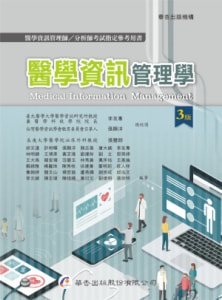
醫學資訊管理學 3版

醫學資訊管理學
3版

作者:張慧朗、邱文達、李友專等
華杏出版股份有限公司
2018
ISBN:9789-8619-4503-3
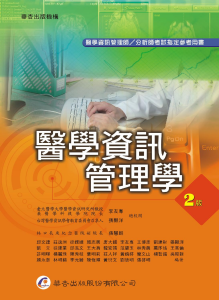
醫學資訊管理學 2版

醫學資訊管理學
2版

作者:張慧朗、邱文達、李友專等
華杏出版股份有限公司
2013
ISBN:9789-8619-4293-3
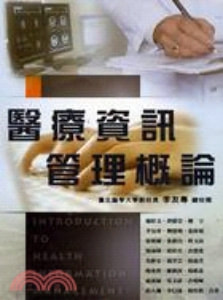
醫療資訊管理概論

醫療資訊管理概論

作者:龐婷文, 李友專等
華格那出版有限公司
2010
ISBN:9789-8663-3562-4
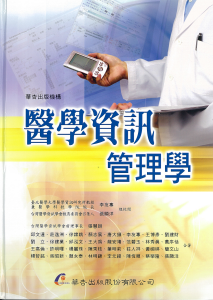
醫學資訊管理學

醫學資訊管理學

作者:張慧朗、邱文達、李友專等
華杏出版股份有限公司
2006
ISBN:9861-9400-06
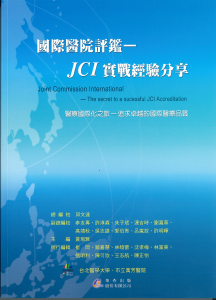
國際醫院評鑑 JCI實戰經驗分享

國際醫院評鑑
JCI實戰經驗分享

副總編校:李友專等
華杏出版股份有限公司
2006
ISBN:9572-9228-15

病人安全-理論與實務

病人安全-理論與實務

主編:邱文達, 李友專等
台灣醫務管理學會
2004
ISBN:9570-1725-09

醫療資訊管理學

醫療資訊管理學

作者:吳昭新, 李友專等
偉華書局有限公司
2002
ISBN:9576-4050-68
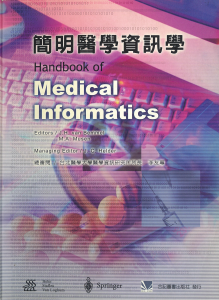
簡明醫學資訊學

簡明醫學資訊學

總審閱:李友專
合記圖書出版社
2002
ISBN:9576-6688-75

SELECTED TALKs


SELECTED NEWS

 
裝飾圖片


FREE RESOURCE

 
裝飾圖片

The Disease Map
疾病地圖


The introduced disease maps visualise how human disorders are 'positioned' against each other in a population with respect to an individual biological organism. It is well known that many human disorders are risk factors for or consequences of other disorders. While many of such positive associations between disorders are well known and understood, many remain either entirely unnoticed or not properly recognised. Moreover, it is reasonable to assume that certain human disorders can be associated negatively, that is, a person being affected with A, has decreased chances to get affected with B (can be, but not necessary, vice versa). The presented visualisation is a novel tool for validating already known as well as discovering new, never noticed, empirical association patterns between human disorders. While some of such patters can reflect specifics of a healthcare system, many can reveal interesting biological phenomena relevant practically.

1.S Syed-Abdul, M Moldovan, PA Nguyen, R Enikeev, WS Jian, U Iqbal, MH Hsu, YC Li, Profiling phenome-wide associations: a population-based observational study, 2015
2.M Moldovan, R Enikeev, S Syed-Abdul, PA Nguyen, YC Chang, YC Li, Disease universe: Visualisation of population-wide disease-wide associations, 2014
 

Phenome-wide Associations Database
疾病關聯資料庫

  To objectively characterize phenome-wide associations observed in the entire Taiwanese population and represent them in a meaningful, interpretable way.In this population-based observational study, we analyzed 782 million outpatient visits and 15,394 unique phenotypes that were observed in the entire Taiwanese population of over 22 million individuals. Our data was obtained from Taiwan’s National Health Insurance Research Database.

S Syed-Abdul, M Moldovan, PA Nguyen, R Enikeev,WS Jian, U Iqbal, MH Hsu, YC Li, Profiling phenome-wide associations: a population-based observational study, Journal of the American Medical Informatics Association, Volume 22, Issue 4, 1


SELECTED PROJECTs

 
裝飾圖片
 

AI-enhanced Safety of Prescription and clinical application

Ministry of Science and Technology, 2019.07~2020.06
A recent study reported more than 250,000 people in the U.S. to die every year from medical errors. Medical errors are the third-leading cause of death after heart disease and cancer. Unsafe medication practices and medication errors are a leading cause of injury and avoidable harm in health care systems across the world. According to the WHO report, the cost associated with medication errors has been estimated at $42 billion USD annually. WHO launches global effort to salve medication-related errors in 5 years.

In order to decrease medication errors or near miss, a lot of hospitals used “Rule-based” to create a clinical decision support system. However, there are some limitations to practice. For example, there is about 50-90% overridden rate for alerts, not cost-effective, without Randomized Controlled Trial (RCT) and it could not learn to learning.
Our research team has been investing in AI - enhanced Safety of Prescription for a long time. Based on more than 1.3 billion past electronic medical records, we develop software which included unsupervised learning and reinforcement learning. AI-enhanced Safety of Prescriptions (AESOP) is able to simulate real-world physicians’ behaviors by the treatment patterns. It could apply to detect appropriateness of prescription. Now, there are more than 200 physicians are using our system in 250 K patients/year. Physicians accept rate is more than 50% and AESOP agreed rate reaches 85% based on expert reviews

Based on this project, we are expected to upgrade our system (Protection& prevention, Proactive Recommendations), develop reinforcement learning model, create hospital’s report、start clinical trial in US medical institutions, and promote startup business. Then, it can build brand products, increase entry barriers to, expand the market, and build the first AI medical unicorn in Taiwan.
 

Artificial Intelligence for Earlier and Safer Medicine Worldwide

Ministry of Science and Technology, 2018~2019
Aging population in Taiwan is growing rapidly. 12.5 percent of the population is aged 65 or older. Due to the incidence of chronic diseases and degenerative illnesses in the aging population, it has increased the chances of polypharmacy. On average, Taiwanese visits hospital about 14 times in a year and gets at least 4-5 medicines every time. Therefore, the total number of prescription per year is about 345 million. Research has shown that the rate of medication error is 0.5% to 5% which means approximately 0.75 - 7.5 million of dispensed prescriptions in Taiwan are inappropriate. The current clinical decision support system can not prevent medication error efficiently. It is also claimed that 193 tons of medicine have been wasted annually because of poor patient compliance in Taiwan.

Artificial Intelligence (AI) has been used extensively and is expected that machine learning, deep learning and natural language processing will become the major technology in next 5 to 10 years. AI, machine learning especially, is showing its potential in medicine field due to the availability of big data. As Taiwan has the world-class medical electronic data such as electronic medical records and health insurance database, it is a great opportunity to apply big data to develop AI in medicine.

In this project, we aim to develop artificial intelligence for earlier and safer medicine in Taiwan as well as worldwide which includes (1) Create model and system for earlier and safer medicine; (2) Develop artificial empathy; (3) Randomized controlled trial and (4) Medical institutions used and reinforcement learning. It will exhibit Taiwan's strengths to promote the wisdom of medical safety and enhance patient compliance. We will connect industry, government, academia, research and medical between Taiwan and other countries to build a AI with Humanity, for Humanity.
​
In the same time, this project will provide medical databases containing disease-disease, disease-medication and medication-medication association. By sharing medical resource, It will help to improve the application of medical treatments, ensure the safety and quality for healthcare.